

Beyond the Technology: Leading the future before it arrives
Technology has never transformed an organization. People do. As AI, automation, and data reshape every industry, the real competitive advantage will belong to organizations that build trust, create cultures of innovation, and have the courage to move from experimentation to execution. This keynote explores how leaders can inspire adoption, make responsible decisions, and create organizations where technology becomes a catalyst for human potential—not a replacement for it. You will leave energized with practical leadership principles to turn today's disruption into tomorrow's opportunity.
Presented by: Miloš Topić , Grand Valley State University
Miloš Topić is Vice President for Information Technology and Chief Digital Officer at Grand Valley State University. As vice president, Topić is the senior technology leader for the university and is responsible for the entire IT portfolio ranging from digital capabilities, infrastructure, security and application management across all of Grand Valley's academic and administrative areas.
Topić joined Grand Valley State University in August 2020 after serving as Vice President and Chief Information Officer at Saint Peter's University, where he was responsible for setting the strategic direction and overseeing the day-to-day operations of two divisions, information technology and operations. He has over twenty years of experience in positions of increasing responsibilities focused primarily on technology, innovation, strategy, operations and leadership. His experiences range from startups to Fortune 1000 companies to contributing across multiple public and private universities. Miloš’ responsibilities and experiences have included customer experience; business development and product design; project and portfolio management; information security; network and system engineering as well as programming and web development.
Miloš formal education includes a bachelor’s degree in computer science with a minor in mathematics; Masters of Science in Information Systems; an MBA and a Ph.D. in Business Administration. His dissertation research was focused on the role of Chief Information Officers (CIOs) in leading innovation within higher education. Additionally, Miloš is a frequent speaker on leadership, innovation, and building high-performing teams across a wide range of national professional networks and industries. Finally, Miloš has been advising corporate boards and C-suites on business strategy, digital possibilities, and innovation since 2008.

AI and Data Governance are Different! How do they Align?
The emergence of large language models, machine learning, and other AI technologies has revolutionized the way data, analytics and decision-making are used in business. AI processes large data volumes in order to identify patterns, answer questions, and generate insights. The capabilities are striking – but there are limitations. It’s susceptible to errors; bias, data misuse, and possibly law or policy violation. AI governance has emerged as a discipline focusing on the ethics, integrity, and auditability of data usage and processing.
This presentation will review some real-world examples of AI Governance and Data Governance - and discuss the similarities, differences, and intertwined relationship of both. We’ll also discuss the common structures, the stakeholders, and why both are crucial for Analytics and AI development success.
Presented by: Evan Levy, Integral Data
Evan Levy is a consultant and speaker specializing in Enterprise Data Strategy, Artificial Intelligence, and Analytics. He advises clients on addressing business challenges through their existing data, combined with emerging tools and modern practices.
Evan has spent his career delivering technology solutions spanning software product development and industry-focused consulting. He has managed high-profile implementations for Fortune 500 clients across financial services, retail, telecommunications, health/life sciences, government, and insurance.
Prior to his current role, Evan served as Sr. VP of Data Management and Applications at Centene and VP, Business Consulting at SAS. He also co-founded Baseline Consulting, a boutique firm acquired by SAS.
Evan writes for leading industry publications and is a featured speaker and instructor at major industry events. He is also a Research Fellow and faculty member at TDWI and an adjunct professor at the University of Maryland.

Is the past prologue to the future?
“We can see the computer age everywhere but in the productivity statistics.”
Robert Solow, Nobel laureate in Economics, 1987
The complaints about analytics and data have not changed substantially in 30 years, nor have our challenges with the work. If you follow industry marketing, the latest technology will solve these problems. Industry hype plus perennial complaints can lead you to believe that maybe we should have been doing something different all along.
These days the hype-driven question is "What are we going to do about AI?" Will ontologies resolve the problems of making sense of data? Will AI automate the job of maintaining the data plumbing? Can we eliminate our technical debt and resolve the data mess once and for all?
There is allure in ignoring what came before because our market is changing so rapidly, and sweeping away the old and start fresh. But what if the past is a prelude, constraining the paths of change, in which case we can't just start anew?
You’re told to move fast. You can't do nothing even if you believe that’s the right choice, and you probably shouldn’t burn everything down and start over. Robustness matters. Reliability matters. Governance and risk matter. You can move fast but it’s equally important to move effectively.
In this keynote Mark Madsen will provide an overview of why we’ve seemingly not made progress on key problems, the fundamental principles that underlie our operating models and technology changes, and how to approach the challenge of taking action to “do something about AI”.
Presented By: Mark Madsen, Cognisee AI
Mark is an award-winning analytics leader with 40 years of global experience helping organizations improve their operations and enable data-driven decision-making. His expertise in using data and analytics to augment decision-making led to the design of emerging technology and business projects around the world. This interdisciplinary experience gives him a unique and pragmatic view of the industry.
He got his start in AI at the University of Pittsburgh and did research on autonomous robotics at Carnegie Mellon University before moving into IT. His pioneering work in decision support earned him numerous awards and accolades. He was a VP of R&D and Fellow in the CTO Office at Teradata, held executive and management roles at vendors, at consultancies, and worked in many roles in businesses. Nonetheless, he is terrible at math until someone owes him money.
The Evolution of Data Platforms for Enterprise Context, Governance, and Action
In this session, you will discover how data platforms are evolving into intelligent ecosystems that power next-generation decision engines. We will explore why data, context, governance, and action form the bedrock of trusted autonomous systems beyond mere foundational models.
Understand the Data Platforms Evolution: Discover how data platforms are shifting from traditional reporting systems into intelligent, governed ecosystems designed to power next-generation, context-aware decision engines.
The Pillars of Execution: Learn why data, context, governance, and action form the bedrock of trusted autonomous systems and why intelligent automation requires more than just foundational models to deliver business value at scale.
Architecting for the Future: Explore how to prepare your organization for the next wave of enterprise transformation by building action ready architectures that seamlessly connect trusted data, business context, policy, and real-world execution.
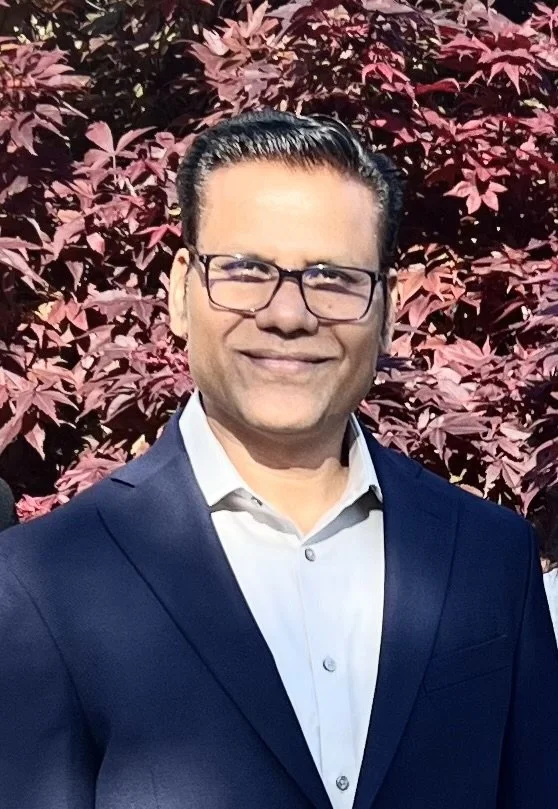
Presented by: Nagesh Perumalla, Capital One Financial
Nagesh Perumalla is an award-winning Principal Data Architect at Capital One. He brings a deep, practical perspective to data modernization, guiding enterprise ecosystems from legacy infrastructure to cloud-native, AI-driven lakehouse architectures. Nagesh specializes in designing and optimizing scalable, real-time analytics platforms across AWS, GCP, Azure, Snowflake, and Databricks. An IEEE Senior Member and recognized data architect, he seamlessly integrates enterprise data with advanced AI/ML architectures.
He holds a Master’s degree in Computer Science from the University of Illinois and maintains an elite portfolio of industry-recognized AI, ML, and advanced architecture certifications from AWS, Google Cloud, Databricks, and Snowflake.

The AI-Powered Factory: How Data and AI Are Reshaping U.S. Manufacturing Competitiveness
U.S. manufacturers are under pressure to modernize, reshore operations, and compete globally — all while navigating a shrinking skilled workforce and decades of legacy infrastructure. The old playbook of competing on labor cost is over. The new playbook is competing on intelligence.
In this session, Brunilda Caushi explores how AI and data are becoming the great equalizers for American manufacturing — enabling factories to do more with less and fundamentally shifting what's possible on U.S. soil.
But technology alone isn't the answer. The biggest barriers to AI adoption in manufacturing aren't technical — they're human. Skilled labor gaps, aging institutional knowledge, and organizational resistance to change all stand in the way. The shop floor and the C-suite often speak entirely different languages when it comes to AI, creating a trust gap that stalls even the most promising initiatives.
Brunilda breaks down what it actually takes to move past these blockers: building a modern industrial data stack that connects legacy systems to real-time AI — not through a costly rip-and-replace, but through pragmatic, incremental evolution. She'll share what "AI in production" really looks like versus the pilot purgatory most manufacturers are stuck in.
The payoff? Factories that operate like software companies — iterating, learning, and adapting at speed. A competitive advantage that compounds over time. And ultimately, an economic case for bringing manufacturing home that actually pencils out.
Attendees will walk away with a clear understanding of:
- Why organizational change matters as much as technology selection
- What a modern manufacturing data architecture looks like in practice
- How AI augments a smaller workforce rather than replacing it
- The connection between AI adoption and U.S. economic resilience
Presented by: Brunilda Caushi, AWS
Brunilda Caushi is a Technology Executive specializing in Physical AI, Autonomous Systems, Digital Engineering, Robotics, and Software Defined Platforms. She currently serves as an Industry Strategist at Amazon Web Services (AWS), advising Automotive and Manufacturing organizations on their most complex digital transformation challenges.
Brunilda operates at the intersection of physical and digital worlds — helping enterprises harness AI, data, and cloud-native architectures to reimagine how products are designed, built, and operated. Her work spans the full innovation lifecycle, from intelligent edge systems to enterprise-scale industrial modernization.
Brunilda is passionate about helping U.S. manufacturers bring operations back to American soil. She believes that by empowering companies with AI and data-driven technologies, we can reduce economic stress and build a more resilient industrial future.

Moving Beyond Dashboards: Building Systems Where Data Becomes Part of the Work
Organizations often invest heavily in dashboards, reports, and analytics tools, only to find that better data does not automatically lead to better decisions. The real challenge is not just producing information. It is making data part of the way people work.
In this session, Christopher Mowers will explore how teams can move from passive reporting to operational data systems that actively support decisions, accountability, and process improvement. Drawing from his work leading enterprise systems in a growing construction company, Christopher will share practical ways to connect analytics, automation, and business-user tools so data becomes embedded in daily operations rather than isolated in spreadsheets or dashboards.
While this is not primarily a session about AI, it will also address why this kind of systems work is essential groundwork for effective AI. Organizations cannot meaningfully advance into AI-assisted analytics, conversational insights, or higher levels of automation if their data is fragmented, disconnected, or untrusted.
Attendees will leave with a practical framework for thinking about data not as a separate technical function, but as a living part of organizational operations.
Presented by: Christopher Mowers, Glass Roots Construction
Christopher Mowers is Director of Enterprise Systems at Glass Roots Construction, where he leads the design and evolution of the systems the company runs on. His work focuses on building operational platforms that combine automation, analytics, and business-user tools so data becomes part of how work actually gets done.
Christopher works at the intersection of technology, operations, and human behavior, with a focus on designing systems that teams adopt and that scale as organizations grow. He is a regular contributor to the Zoho Developer Community, and his work has been featured by the Zoho Creator team during Developer Month, by Catalyst by Zoho in the Meet the Makers series, and at Zoholics US.
Christopher is an AWS Certified Developer Associate, a member of the Association for Computing Machinery, and is pursuing a Master’s degree in Computer Science at Ball State University.

Scaling AI with Trust: Microsoft's Responsible AI Framework
As AI becomes embedded in core business processes, organizations must balance innovation with trust, risk management, and regulatory compliance. This session explores Microsoft's Responsible AI framework, including the principles, governance models, policies, and engineering practices used to design, evaluate, deploy, and operate AI systems responsibly.
Learn how Microsoft operationalizes Responsible AI through a comprehensive approach that spans the entire AI lifecycle, from risk assessment and human oversight to security, transparency, monitoring, and compliance. We will discuss practical strategies for governing AI at scale, mitigating emerging risks, and establishing the organizational foundations needed to accelerate AI adoption with confidence.
Attendees will gain insights into how leading organizations can build trustworthy AI systems while fostering innovation, maintaining regulatory readiness, and creating sustainable business value.
Presented by: Sudha Kumar, Microsoft
Sudha Kumar serves as a Strategic Account Technology Strategist at Microsoft, where she leads AI strategy, cloud modernization, and enterprise transformation for a major Financial Services and Insurance organization. With more than 25 years of experience spanning AI Transformation, analytics architecture, SAP and operations modernization, and global delivery leadership, Sudha helps organizations adopt Microsoft products and solutions like M365 Copilot, Microsoft Foundry, and the broader Microsoft Cloud to improve productivity and operational excellence. She is recognized for her ability to align technology with business priorities, guide responsible AI adoption, and drive measurable outcomes through data‑driven decision‑making. Sudha is a trusted advisor to executives, known for her strong communication, stakeholder engagement, and practical approach to large‑scale transformation.

The Hardest Problem in Analytics Isn’t the Data
Data rarely changes organizations. People do. As artificial intelligence makes it easier to generate analyses and insights, the ability to influence decisions and shape behavior may become the most important skill in analytics. While much of the industry focuses on data quality, technology, and tools, even the most sophisticated analytics can fail when stakeholders do not trust the results, challenge the metrics, lack a clear path to action, or face incentives that discourage change. This session explores why human behavior, not technology, often determines whether analytics succeeds or fails, and provides practical frameworks for turning intelligence into action in an increasingly AI-enabled world.
Presented By: Jay Lindeman, Corewell Health
Jay Lindeman serves as Director of Strategic Planning & Decision Support Analytics at Corewell Health, Michigan's largest health system, where he leads a multidisciplinary team focused on analytics, decision making, and strategic insights. With over a decade in healthcare, he has helped organizations leverage data to improve performance, inform strategy, and support executive decision-making.
Jay is recognized as an Alteryx ACE and serves as an internal Tableau Trainer. His experience spans the full analytics lifecycle, from technical solution development and data strategy to governance, adoption, and organizational change. He is passionate about helping leaders move beyond reporting and measurement to create meaningful action and lasting impact through data.

Navigating the Future: Leadership, Agility & Emerging Tech
The future of enterprise technology will be shaped not by how quickly organizations adopt new tools, but by the discipline of the leadership guiding that adoption. As AI and automation accelerate, the real differentiator is the philosophy, governance, and operating model that ensure innovation strengthens the institution rather than introducing unnecessary risk.
In this session, Christopher Ortega, CIO of LMCU, will share how his team built a responsible technology philosophy, a modern Center of Excellence, and a governance framework for emerging technologies that enables innovation with clarity, safety, and accountability. The approach begins intentionally in the back office, where new capabilities can be tested, refined, and governed before reaching member-facing experiences, ensuring stability, trust, and operational maturity.
Attendees will learn how LMCU is leveraging Copilot to augment employee productivity and reduce friction across daily workflows, and how the organization is preparing to adopt Claude within software development to accelerate engineering velocity and improve code quality. The session will also explore how UiPath is driving process improvement through automation and Agentic AI, enabling systems to identify, recommend, and execute operational enhancements across business lines.
These advances are paired with a comprehensive Agile transformation, aligning teams, workflows, and leadership practices to support faster delivery, tighter feedback loops, and more adaptive execution. Together they form a unified operating model: responsible philosophy, structured governance, and organizational agility working in concert.
Presented By: Christopher Ortega, Lake Michigan Credit Union
Christopher Ortega is a technology and strategy leader who believes innovation should never be divorced from humanity, or from a good cup of coffee. With a career spanning digital transformation, cybersecurity, and workforce development across private-sector and federal environments, he translates complex trends into clear, actionable strategies that make sense to boards, executives, and the communities they serve.
At Lake Michigan Credit Union, he leads initiatives that blend analytics, agile culture, and member-first thinking; proving that emerging technology and empathy can, in fact, coexist. Whether he's architecting a Center of Excellence or embedding the 3Cs value system (Curious Minds, Collaborative Hearts, Continuous Excellence), Ortega brings both rigor and heart to the table.
He's known for driving large-scale transformations using Agile methodologies, helping organizations accelerate delivery and build adaptive cultures. His approach to AI centers on responsible adoption that enhances accuracy, expands capacity, and strengthens human potential. He's also a champion of regional talent pipelines and ethical tech adoption.
Splitting his life between Michigan and Florida, Ortega brings a national lens to regional conversations about equitable access to technology and the future of work. He is a sought-after voice on AI in business, agentic automation, and organizational transformation.

Your AI Isn't Hallucinating. Your Data Is.
Ask Sales how many customers you have. Then ask Finance, Support, and Marketing. You'll get four different numbers, and none of them are wrong; each team applies its own legitimate lens to the same business. That's not a data quality failure, it's a silo problem data leaders have lived with for years.
AI doesn't live with it the same way. When an AI agent needs an answer, it queries everything at once, and without a governed source underneath it, it doesn't hand you four honest, inconsistent numbers. It picks one, states it with total confidence, and moves on.
Niranjan Patel, Field CTO at Syncari, will help you see this pattern already playing out in your own business, explain why most AI initiatives underperform, and share proof points from real Syncari customers. You'll leave with three questions to ask at your next AI project meeting.
Presented By: Niranjan Patel, Syncari
Niranjan Patel is Field CTO at Syncari, bringing over 25 years of experience in enterprise application development, iPaaS integration, and Master Data Management. He specializes in architecting MDM-powered ecosystems that unify data across HR, Finance, Sales, and Support systems, establishing trusted, governed data through real-time bi-directional sync that eliminates silos and drives confident, enterprise-wide reporting.
Before joining Syncari, Niranjan built his career in enterprise technology leadership, most recently as Senior Director of Enterprise Application Development at Siemens Digital Industries Software. In that role, he led cross-functional global teams responsible for delivering both employee-facing and customer-facing applications at scale.

The Foundation of Intelligence: Why Data Governance is the Bedrock of AI Readiness
As organizations race to transition from AI experimentation to enterprise-scale implementation, they are discovering a hard truth: your AI is only as reliable as the data fueling it. Without a robust governance strategy, AI initiatives face significant hurdles, from "hallucinations" caused by poor data quality to severe compliance and security risks.
In this session, Bobbi Caggianelli explores why Data Governance is no longer a back-office compliance function but the essential engine for AI readiness. We will dive into the technical and strategic pillars required to move beyond the hype and deliver trusted AI outcomes.
Presented By: Bobbi Caggianelli, Collibra
Prior to joining Collibra, Bobbi Caggianelli spent four years building a data governance and quality practice from scratch at a multi-billion dollar life and annuity company. She joined Colliba after working with Collibra's toolset, in part to share her experience with others. Her goal is to help companies build a successful governance practice and show them how Collibra enables that maturation journey. Bobbi has an MS in Business Analytics and is a Master Black Belt in Six Sigma.

From Analytics to AI: Building Trust with Alteryx One
Explore how the latest capabilities in Alteryx One are helping organizations prepare data, automate processes, and put AI into action without sacrificing trust or governance. This session will introduce Alteryx’s VURA framework: Visible, Understandable, Repeatable, and Auditable. We will explain how governed data, reusable workflows, and established business logic create a reliable foundation for enterprise AI. We will also highlight new Alteryx One capabilities designed to help teams move beyond experimentation and deliver scalable, business-ready AI outcomes.
Presented by: Adam Rant, Alteryx
Adam Rant is a Customer Success Manager at Alteryx with more than a decade of hands-on experience using analytics to solve real-world business challenges. Before joining Alteryx, Adam worked at Amway, where he used the platform to automate data processes, improve supply chain insights, and help generate measurable time and cost savings. Today, he partners with organizations to expand analytics adoption, identify high-value use cases, and turn complex data and processes into solutions that are visible, understandable, repeatable, and auditable. Adam is passionate about helping people move beyond manual work and use automation, analytics, and AI to make smarter decisions.