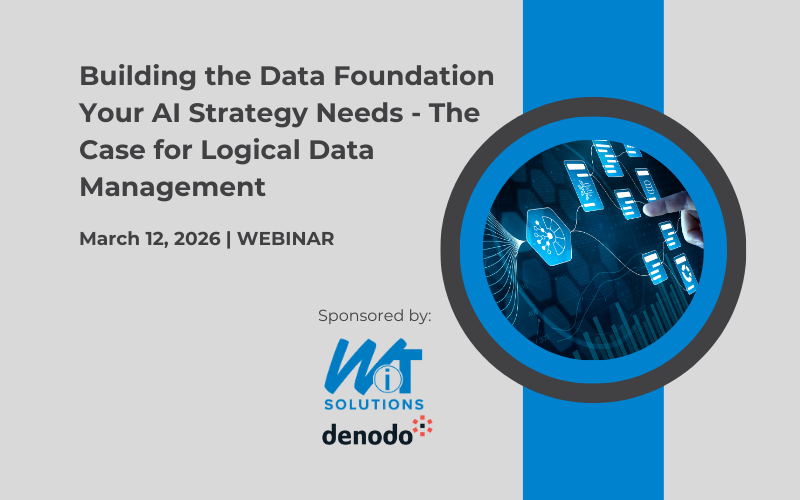
WEBINAR: Building the Data Foundation Your AI Strategy Needs - The Case for Logical Data Management
Join WIT Solutions for a strategic discussion on how Logical Data Management creates the governed, secure foundation required for enterprise AI success.
As AI moves from experimentation to production, one reality has become clear: you can't scale AI without a solid data foundation. But building that foundation the traditional way-copying data everywhere-creates governance gaps, security risks, and unsustainable complexity.
Data lakes and warehouses are essential components of modern data architecture, but they're only part of the story. To truly enable AI at scale while maintaining security and governance, organizations are turning to Logical Data Management and Data Fabric approaches that unify access to data wherever it lives-without moving it unnecessarily.
Join WIT Solutions, Denodo, and a special guest from the University of Michigan for a practical discussion on how leading organizations are building the data infrastructure that makes AI both possible and responsible.
What we'll cover
Why AI success depends on governed, secure access to distributed data
How Logical Data Management and Data Fabric fit within modern data architectures alongside lakes, warehouses, and operational systems
Real-world lessons on implementing these approaches in complex enterprise environments
When to move data and when to access it in place
Who you'll hear from
Our emcee from WIT Solutions will frame the strategic importance of data foundations in the AI era
In a fireside chat format, WIT Solutions and our special guest from the University of Michigan-author of a recent O'Reilly publication on Logical Data Management-will share firsthand implementation insights
A technical expert from Denodo will provide closing thoughts on delivering secure, governed data access at enterprise scale
If you're a data leader, architect, or analytics stakeholder building the data strategy to support your AI initiatives, this session will help you understand how to balance access, governance, security, and architectural complexity.